I run Tsumagoi Work&Camp on a former ranch 1,444 m up in Tsumagoi, Gunma. It's a 24-hour lounge on the mountain, and guests sleep in their own car or a tent. I run it on my own, with help from my wife, and there is no front desk.
See the place and book a stay → tsumagoi.kensaur.us
What I couldn't see in one place
Without a desk, everything someone at the desk would notice is mine to check. Bookings and payments. Who is on site right now. Whether the kotatsu was left on. How long the water tank will last. Whether a camera has stopped. I used to check each of these on a different screen or app.
So I automated what a front desk would do, and built one screen for the rest. I call it the Ranch Monitor (牧場モニター).
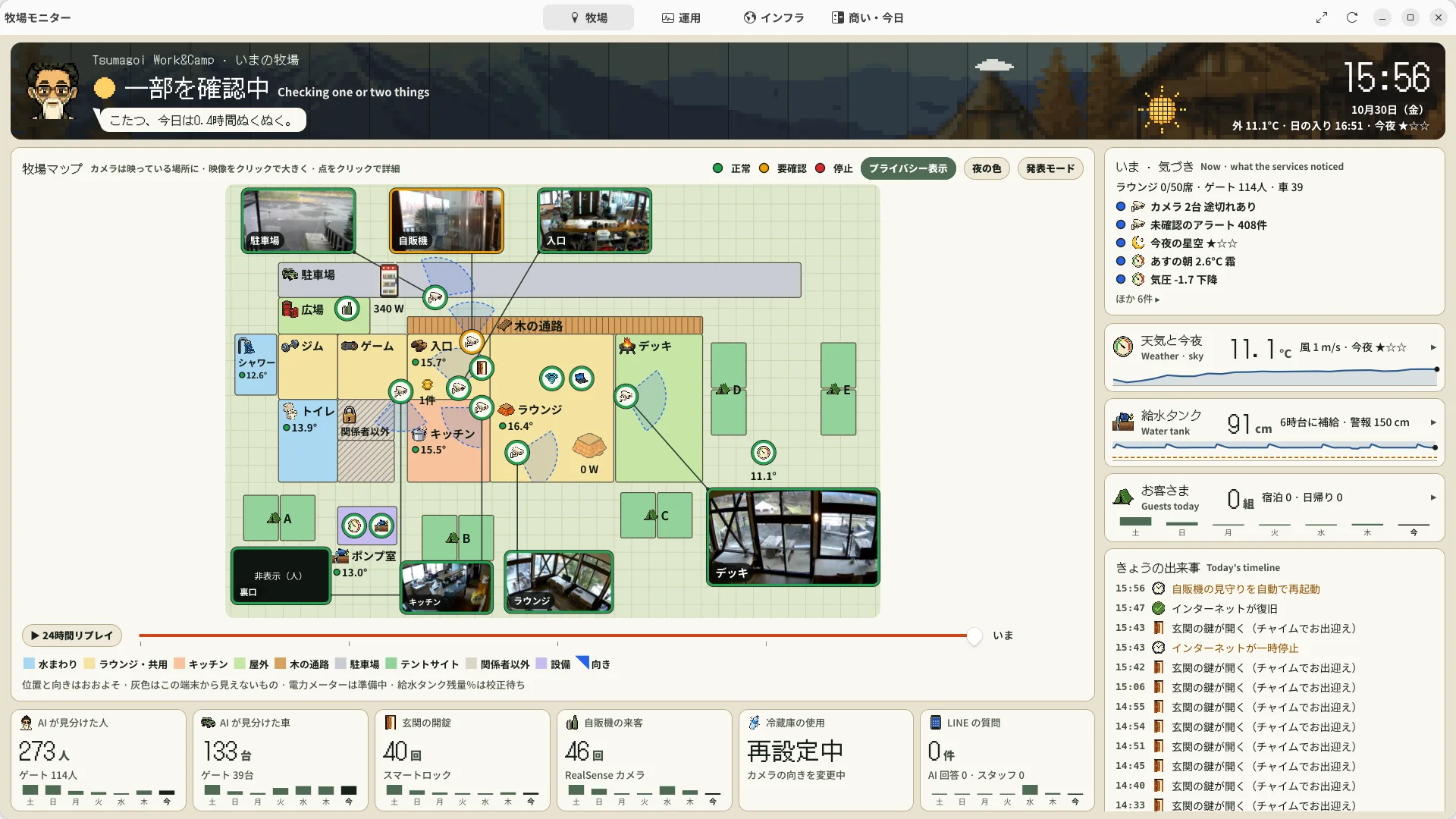
The front desk, automated
- Guests book and pay on the website. Buying a lounge pass issues the Wi-Fi code automatically.
- An unpaid booking gets reminders with a deadline and a payment link.
- An AI answers questions in the website chat, on LINE, on the tablet at the door and by voice at the entrance. It answered 492 in October, and passes anything it can't answer to me.
- Price tags and notices are printed from the same price data as the website, so the paper and the website stay in step.
- A summary of the day before arrives every morning at 8. Only notices that need a look straight away make a sound.
One ledger for the money
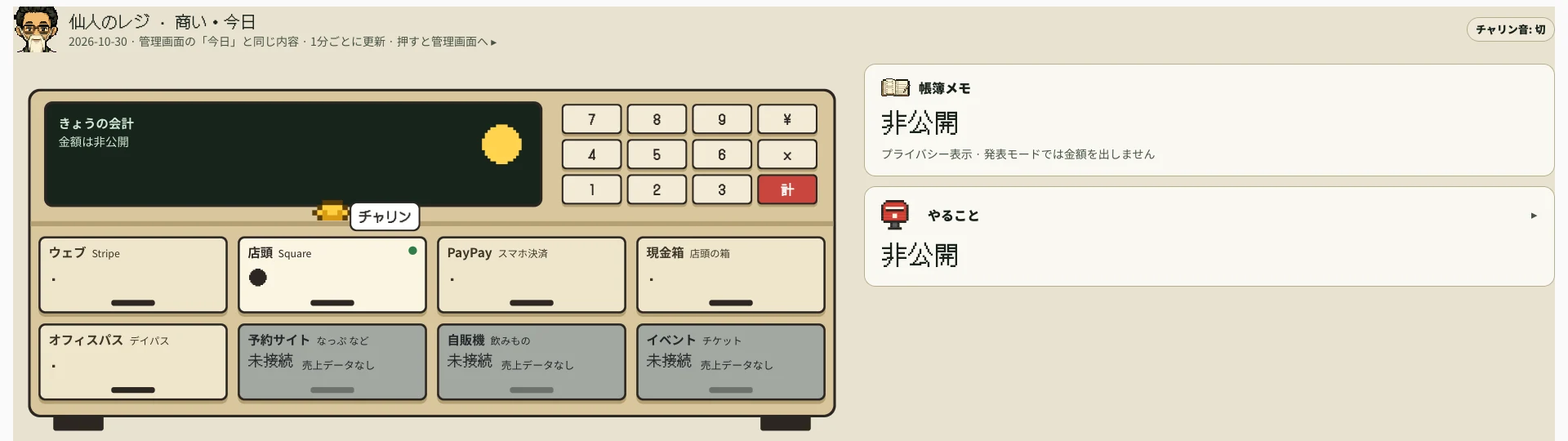
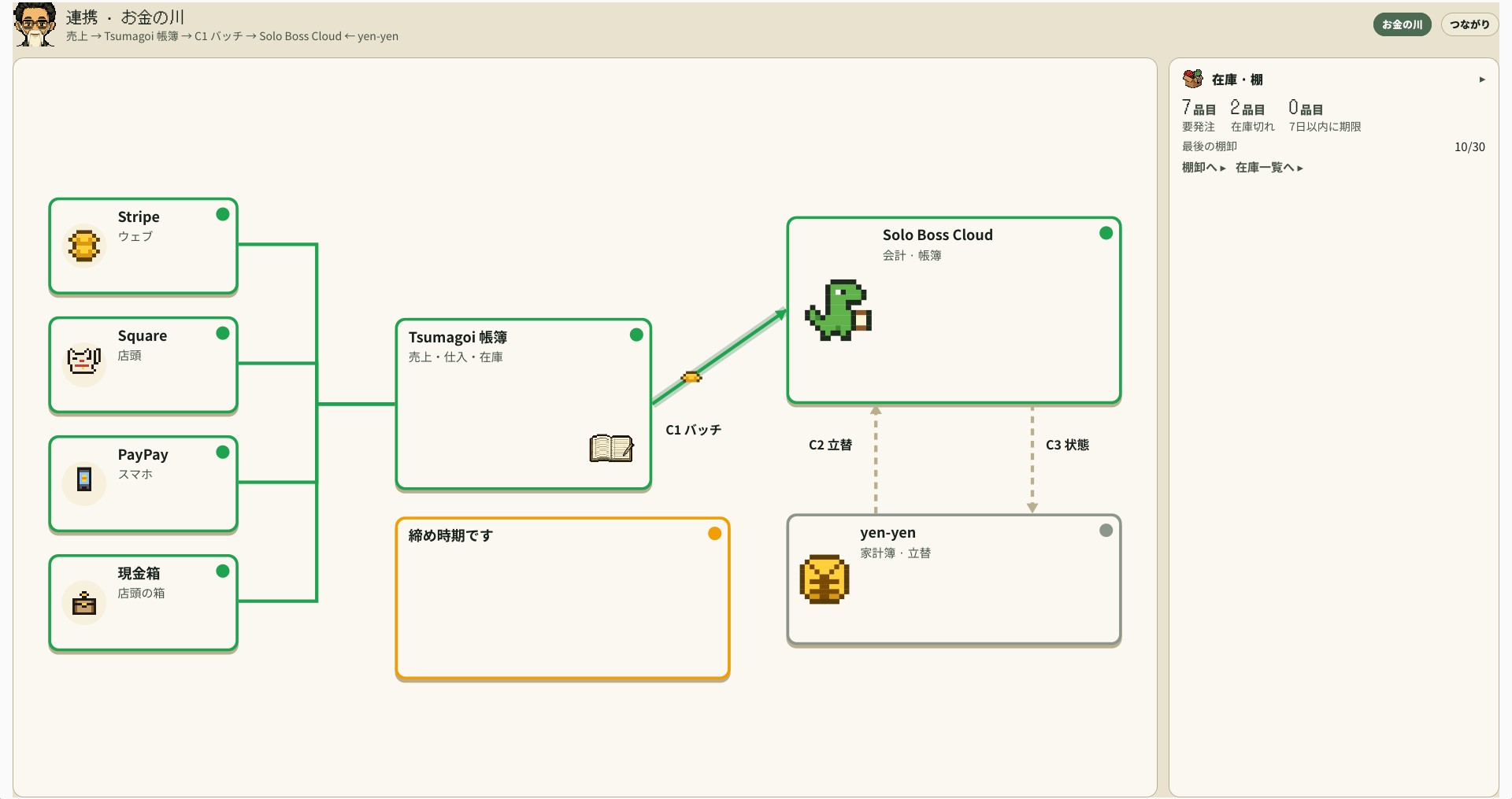
Card payments on the website (Stripe), the till on site (Square), PayPay and the cash box at the shop all come in separately and land in one ledger. Refunds are recorded there too, so I can see what went back and where. The Ranch Monitor's register tab lays out today's takings by till.
Safety and security
- Seven cameras. People, cars and animals are told apart on the PC at the ranch. Only the kind, the camera and the time are kept, and nobody is identified. There is no face recognition and no number-plate reading.
- Since 30 October, more cameras watch for bears, and the lounge and entrance cameras also listen for fire and smoke alarms and breaking glass.
- Remote access to the ranch PCs is tightly limited, and recording backups are encrypted and stored somewhere else.
Sensors, power and water
Each room's temperature and humidity, CO2 in the lounge, and wind and rain from the weather station are on the screen. So are tomorrow morning's frost and how well the stars will show tonight. A sensor that has gone quiet reads "nothing received", never zero.
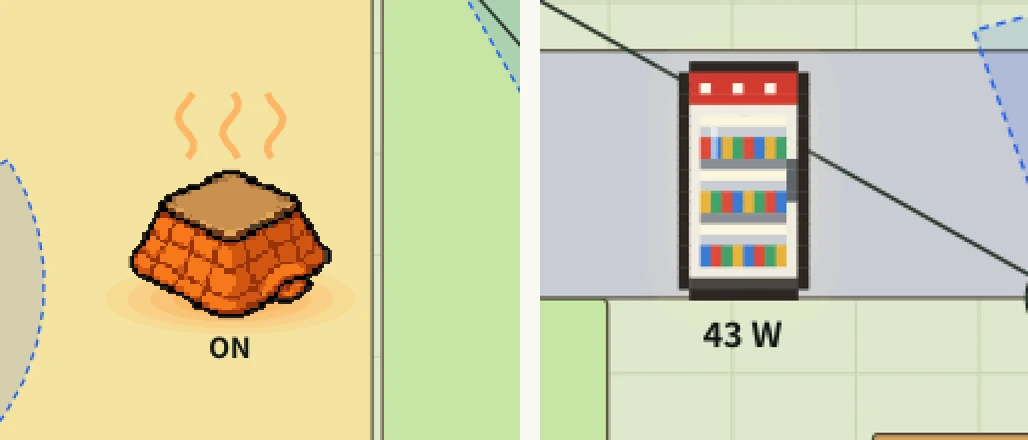
Smart plugs on the kotatsu and the vending machine show live watts and the day's energy, converted to yen at October's rate. Once it told me the kotatsu was on while the lounge camera showed no one.
There is no mains water, so a pump fills a tank. The screen shows the distance to the water's surface in cm and the refill every morning around 5 to 6. It also shows roughly when the level will reach the warning line.
How it works
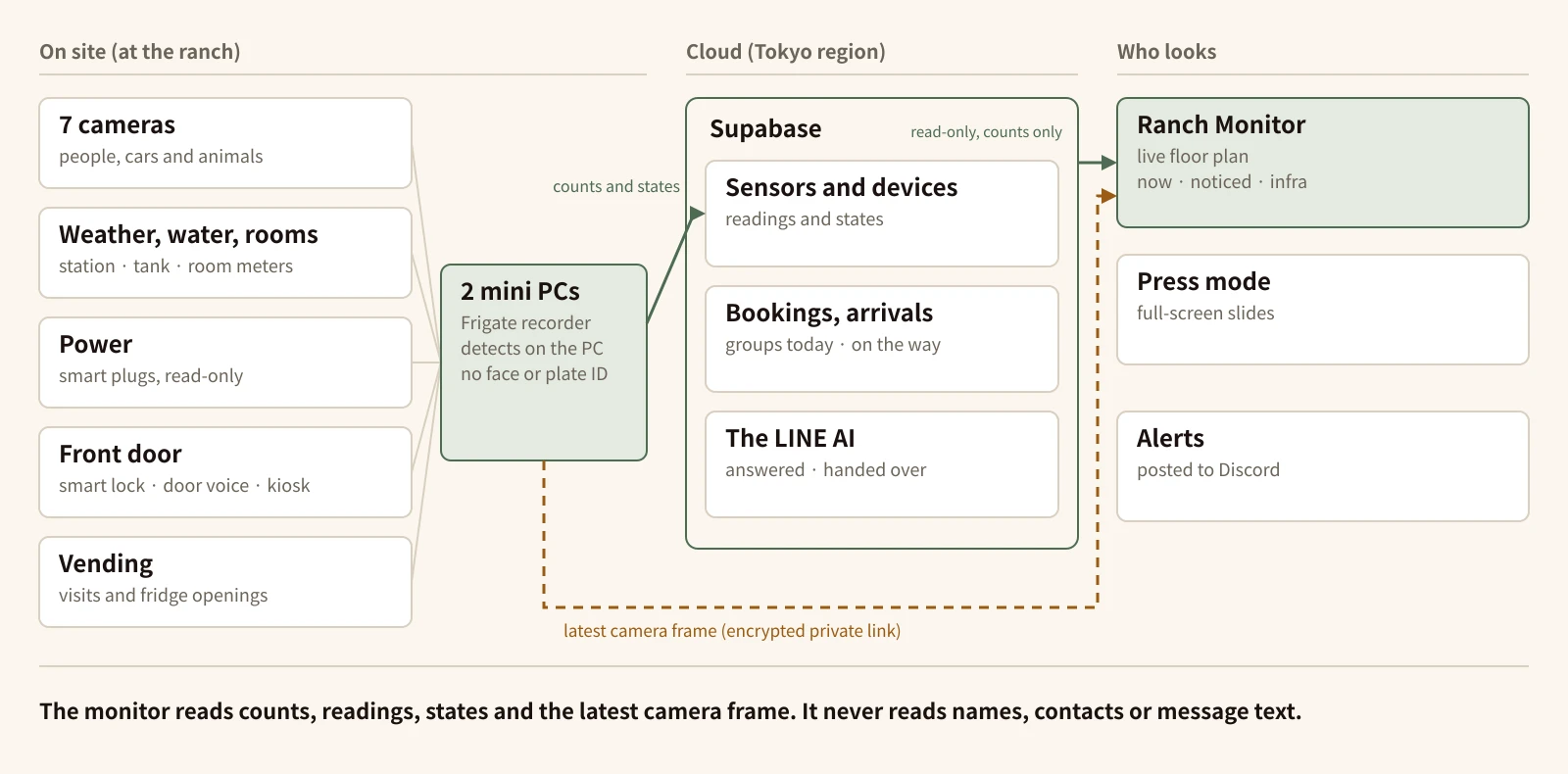
The screen is a desktop app written in Python, running on the two small PCs at the ranch. It reads everything again every two minutes, and a slider steps back through the last 24 hours. Sensor and booking counts come from a database in the Tokyo region, and the monitor only reads them. The data it reads holds no names, contact details or message text. Recordings, with sound in the lounge and at the entrance, are deleted automatically after at most 180 days.
I haven't measured how many hours it saves yet. When I have, the number goes here.
Update (October 30, evening)
The night the post went out, I kept working on the screen. Six things changed.
- People show up faster. Within seconds of a camera seeing someone, a pixel figure appears in that room on the floor plan. No face, no name, and a random look.
- The depth camera (RealSense) that looks inside the entrance now sits on top of the drinks fridge. Aimed the old way, it counted people walking past, so the counting was rebuilt too.
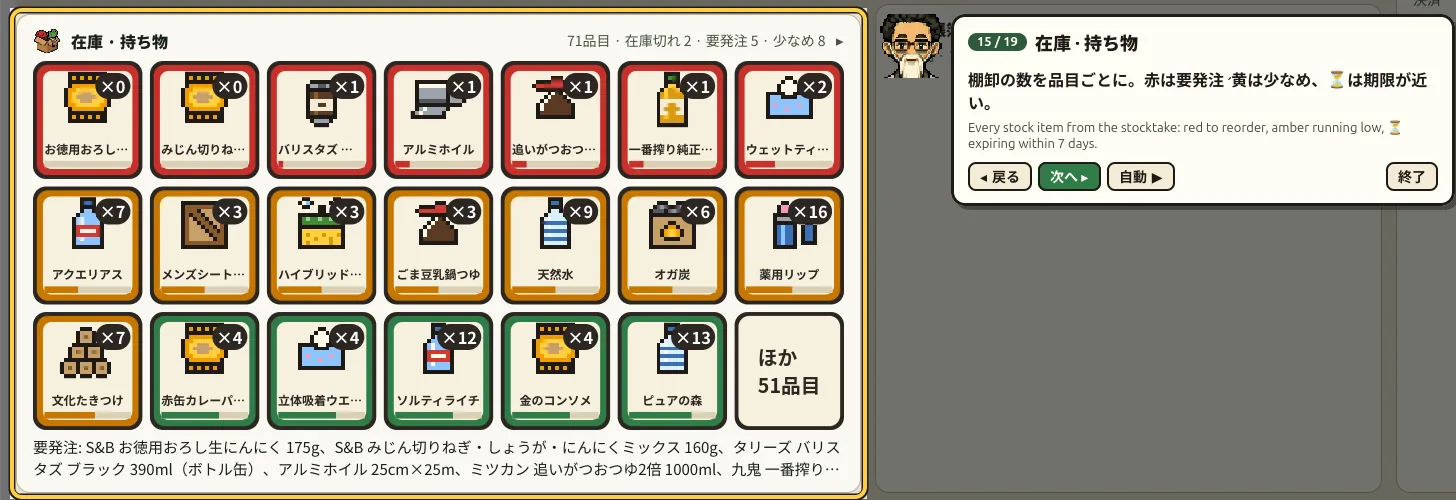
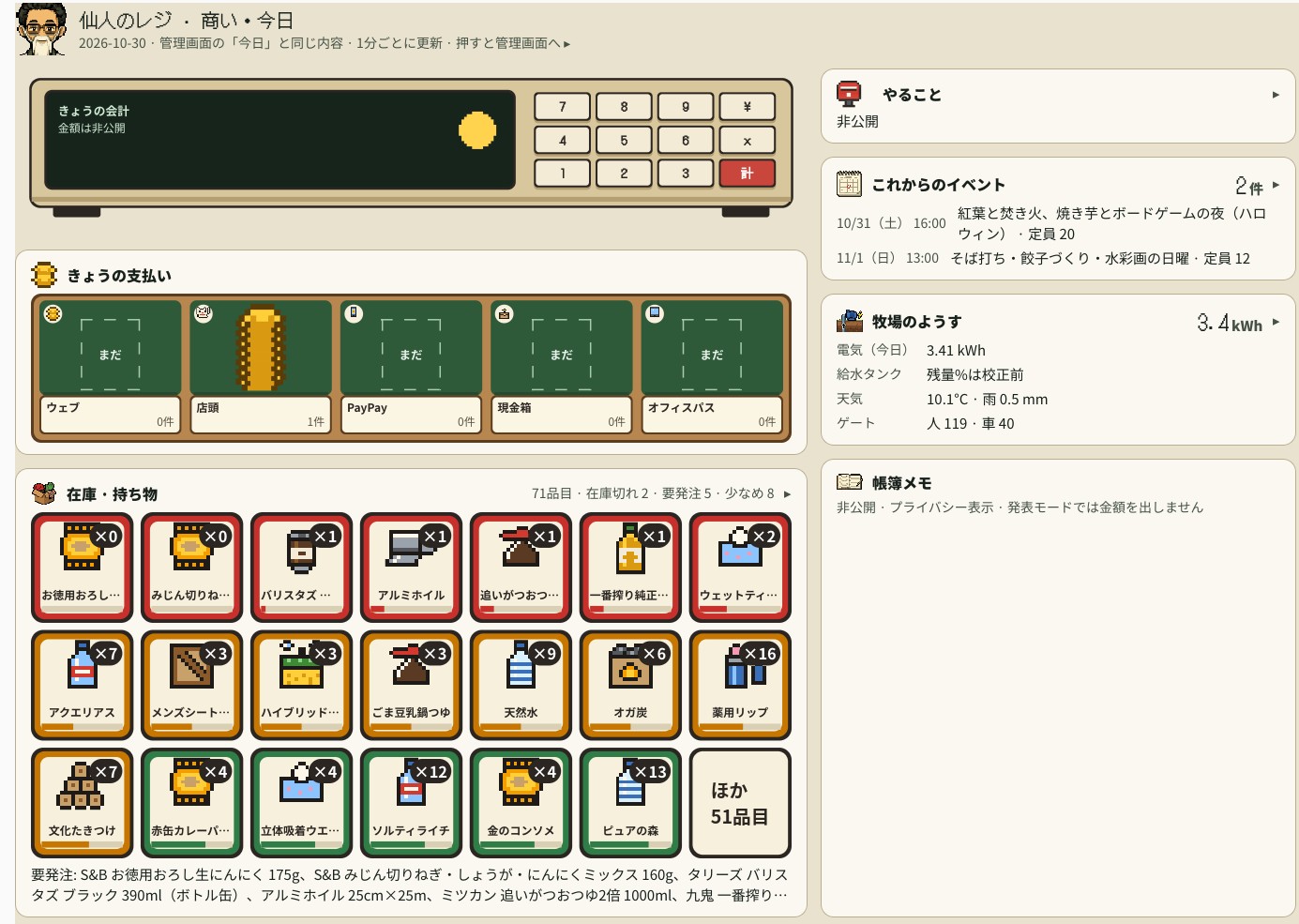
- The shop tab (商い・今日) plays like a game now: a coin stack for each payment method, and the 71 stocktake items as an inventory, red to reorder, amber running low, green fine.
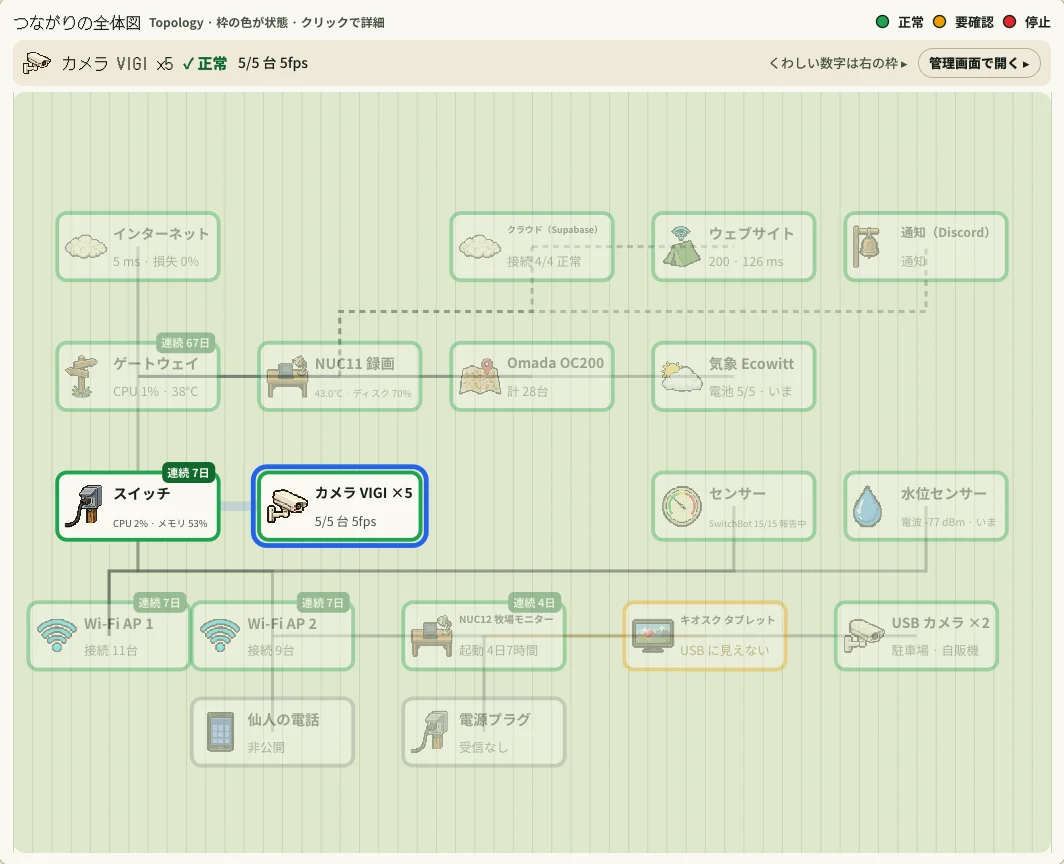
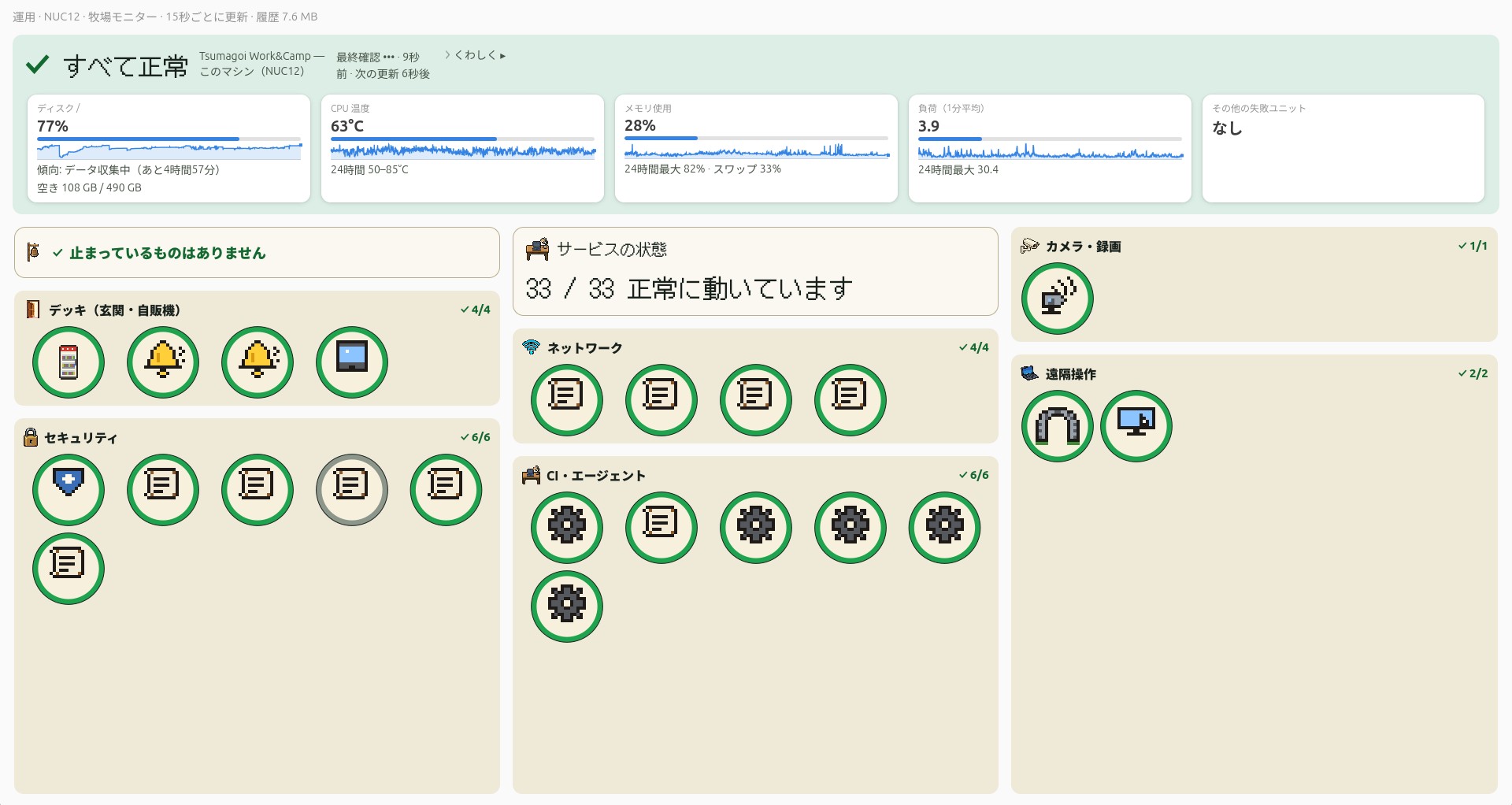
- I drew 35 pixel icons in the Sennin style, one for each service. On the ops, infra and integrations tabs, a green ring means it's running and red means it stopped. You see it without reading.
- Every tab fits one screen and lays itself out again when the window changes size.
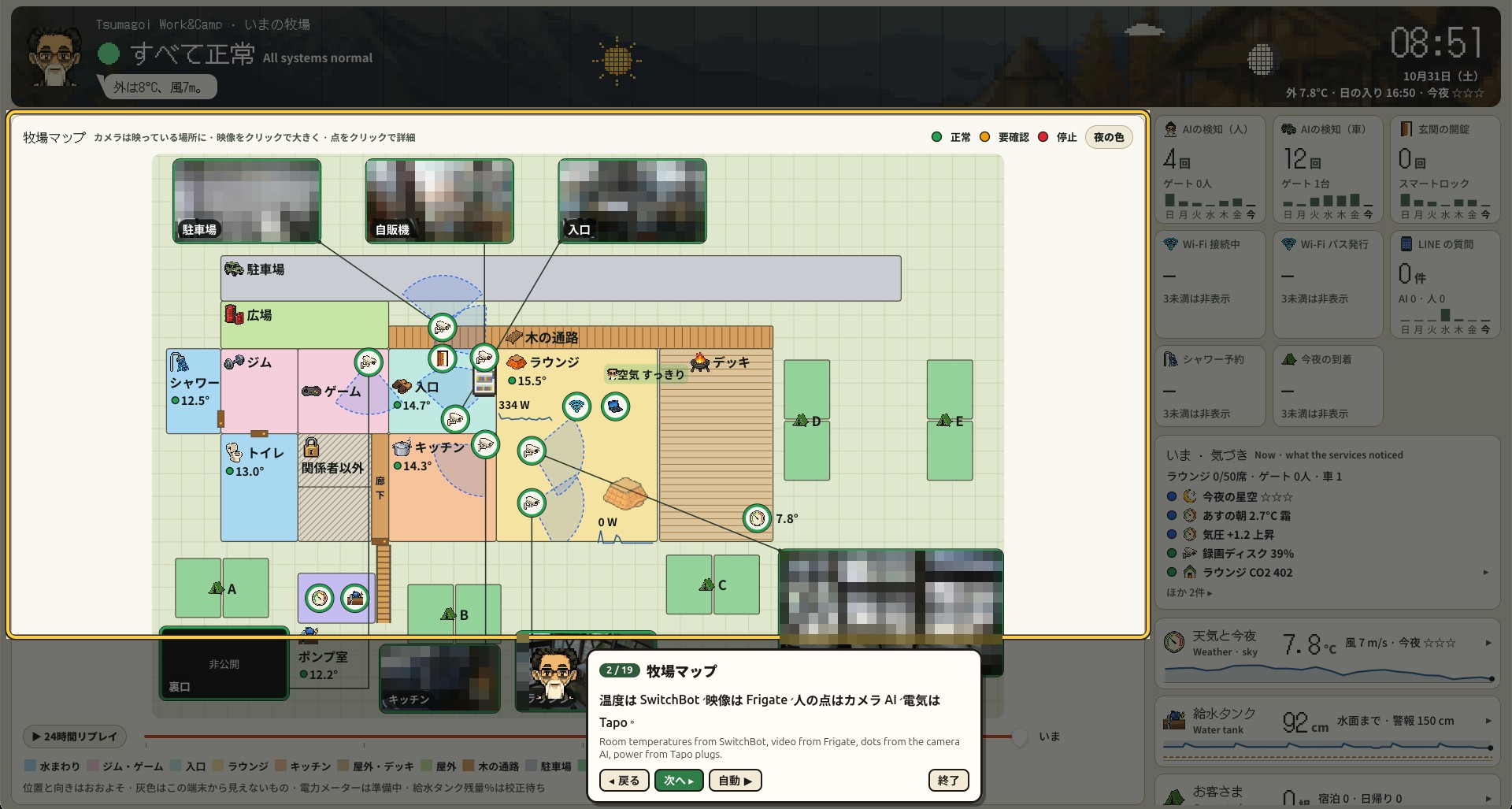
- Press 説明 (guide) and Sennin walks through 19 stops in a speech bubble, so the screen explains itself to someone seeing it for the first time.
Latest (October 31): what it does now
Here is everything that runs a place with no front desk, one screen at a time. Click an image for the full-size JPEG.
Ranch Monitor: the floor plan and guide mode
Cameras, room temperatures, power and the water tank on one floor plan. Within seconds of a camera seeing someone, a pixel figure appears in that room. Press 説明 (guide) and Sennin walks through 19 stops.
Ranch Monitor: the shop tab
Payments as a coin stack for each method, and the 71 stocktake items as an inventory: red to reorder, amber running low, green fine.
Ranch Monitor: 35 service icons
Every service it watches, from cameras and the network to security, the entrance devices and CI, has its own pixel icon in the Sennin style. A green ring means running, red means stopped.
Where the money goes
Web (Stripe), counter (Square), PayPay and cash-box takings land in one ledger, which feeds the accounting app, Solo Boss.
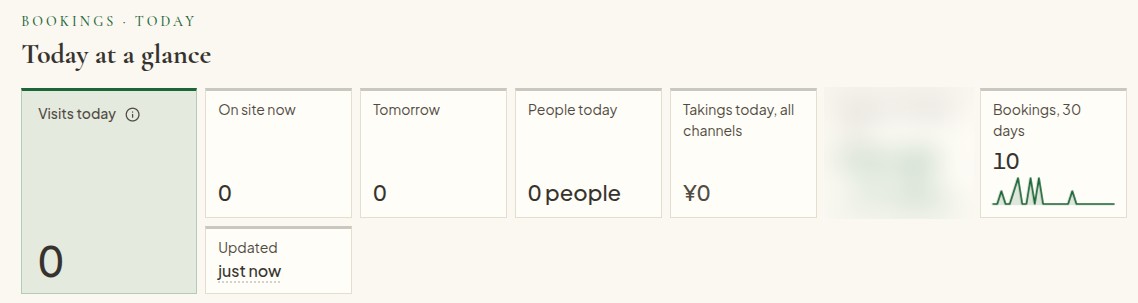
The admin console's Today
The first screen of the morning. Today's visits, arrivals, people on site and takings across every channel add themselves up.
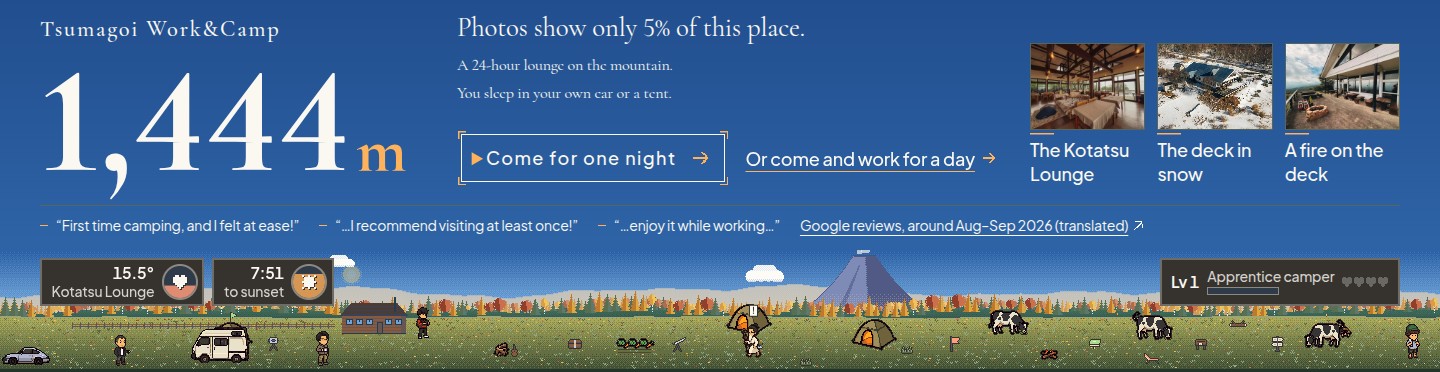
The guest site
Booking, payment, an AI concierge, and the lounge temperature and time to sunset right now. Pixel characters walk across a pixel ranch.
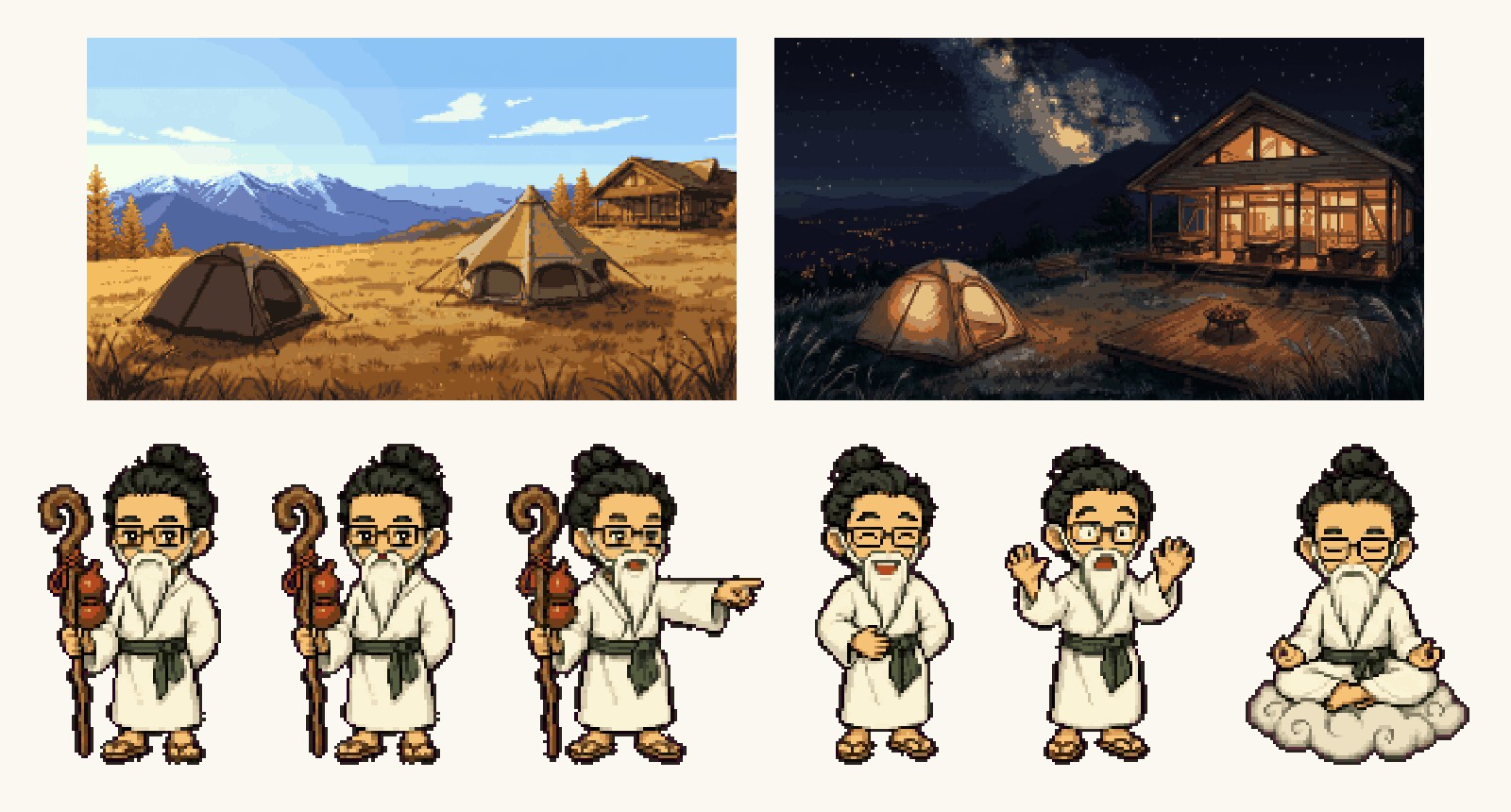
Sennin Kenji in pixels
The site, the Ranch Monitor and the entrance tablet share the same pixel Sennin and the same pixel ranch.
The entrance kiosk and the walkable lounge (coming soon)
Screens of the entrance tablet (the kiosk) and of a lounge you can walk around on the site will be added after the next release.
For press
You're welcome to use the text and images on this page in articles and programmes. Anything we haven't confirmed yet is marked as such.
In one paragraph
Tsumagoi Work&Camp is a 24-hour lounge on a former ranch at 1,444 m in Tsumagoi, Gunma. Guests sleep in their own car or a tent; the building holds the Kotatsu Lounge, fibre desks, hot showers and a kitchen. It is run by one person, Kenji Sakuramoto (Sennin Kenji) of Kensaurus GK, who also built its booking site, payments, AI concierge, on-site sensors and the screen that watches them. It opened on 8 August 2026.
Fact sheet
- Name
- Tsumagoi Work&Camp (嬬恋牧場Work&Camp)
- Where
- Tsumagoi, Agatsuma, Gunma, at 1,444 m. About 3 hours from Tokyo by car
- Opened
- 8 August 2026, after about a year renovating the former ranch building
- Run by
- Kensaurus GK (representative: Kenji Sakuramoto), one person
- The building
- The Kotatsu Lounge (20+ tables, up to 50 seats), 100 Mbps fibre, hot showers, a shared kitchen. Heated by two Daikin commercial air conditioners; nothing burns indoors
- Where you sleep
- Your own car (the car stay) or a tent on the open field. No one sleeps in the building
- Prices
- On the official site
- Built in-house
- The booking site and payments, the AI concierge (web, LINE and the entrance tablet), the Ranch Monitor, the admin console and the entrance kiosk
- Cameras
- They count people, cars and animals; face and plate recognition is off
Images (download)
- Ranch Monitor: floor plan and guide mode (JPEG, 1920×1027)
- Ranch Monitor: the shop tab (JPEG, 1385×985)
- Ranch Monitor: service icons (JPEG, 1920×1022)
- Ranch Monitor: the river of money (JPEG, 1920×1015)
- The admin console's Today (JPEG, 1138×303)
- The guest site's first screen (JPEG, 1440×372)
- Sennin Kenji and the ranch in pixels (JPEG, 1600×860)
Credit: © Tsumagoi Work&Camp / kensaurus. Free for editorial use in articles and programmes with the credit. Crop as you like, but please don't alter what the screens show. Every screen is in press view: no people on camera, no amounts, no device names. Photos of the place are on the company press page.
Coverage so far
- Zenn (Japanese): the design of the Ranch Monitor
- note (Japanese): running a mountain ranch alone
- LinkedIn: There's no front desk at Tsumagoi Work&Camp.
- LinkedIn: A short update on the Ranch Monitor
Contact
Email kensaurus@gmail.com. For a visit, you can also reach the ranch on LINE (@012pteqb). There is no phone line.
If you run a place like this
If you run a small inn, campground or coworking space with no one at the desk, I'm happy to talk. I'll tell you what worked and what didn't and, if it helps, what your current equipment could already do.
A shorter version is on LinkedIn, and the day-to-day story is on note (Japanese). Daily life at the place is on Instagram (@tsumagoicamp).