Why do people want? Why do some people take, and others give? I wrote a book to chase that question: 36 chapters that cross neuroscience, economics, philosophy and anthropology.
The question started when I lived in meritocratic Singapore and then came back to Japan, a country that runs on community and, in places, on a very clear hierarchy.
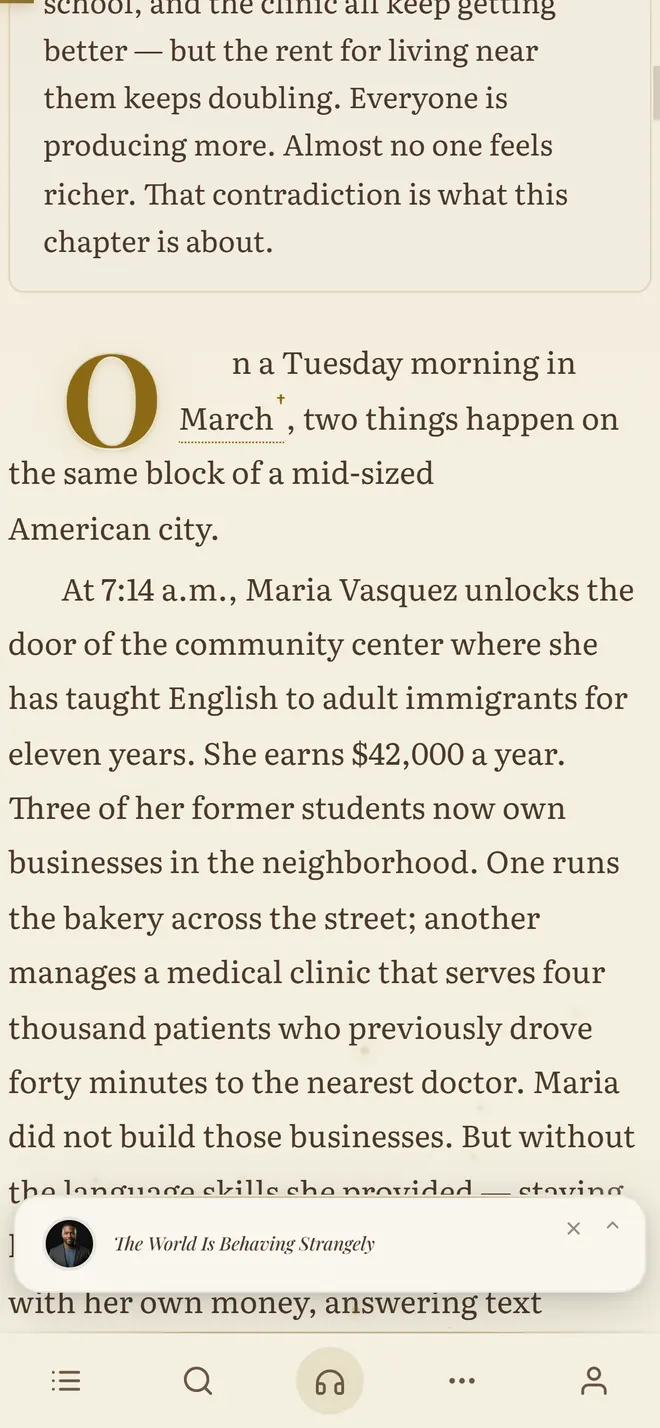
It came out at about 147,000 words. Read cover to cover, that is around eleven hours, and most people won't do that. So the book has other ways in, and it lives on the web and in apps for iPhone and Android.
Read it, hear it, follow it, ask it
You can read it in English, Japanese, Chinese or Thai, and switch language mid-chapter. The other three are translations of the English text.
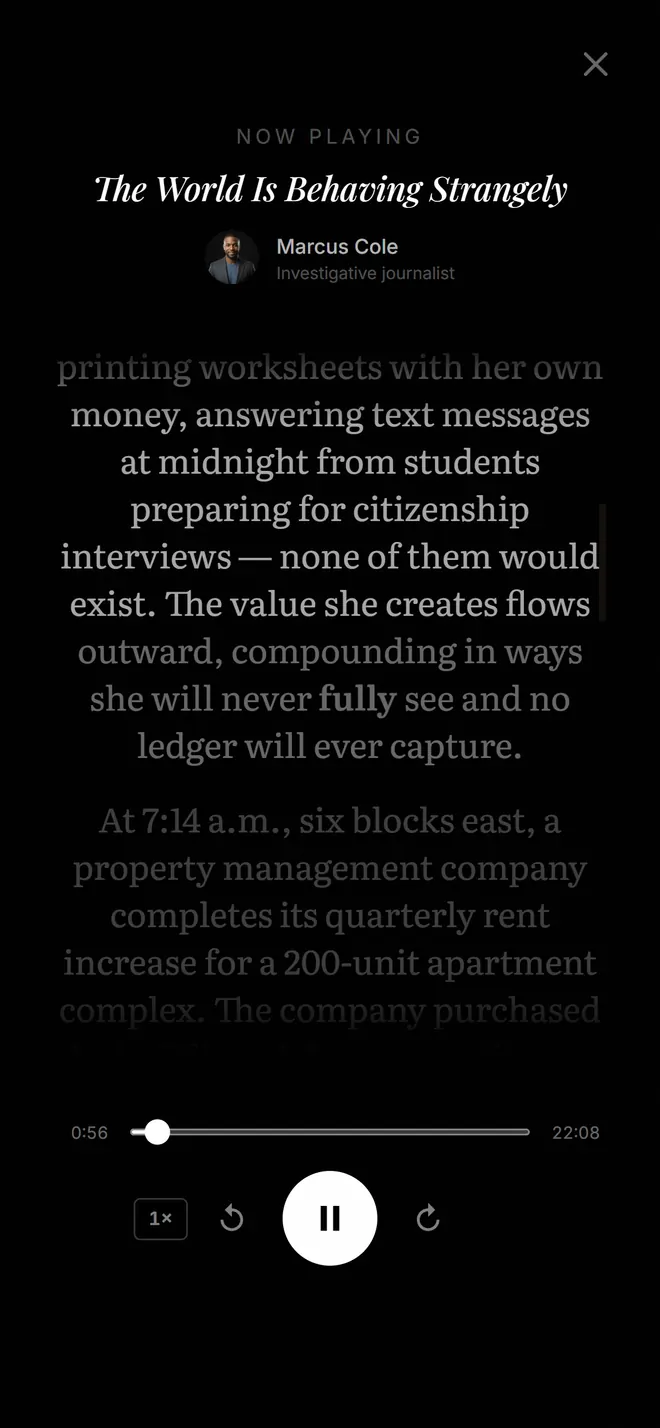
All 36 chapters are narrated in English, about 20 hours in total. The voices are AI voices: twelve fictional narrators who take turns chapter by chapter. While a chapter plays, the word being read is highlighted in the text.
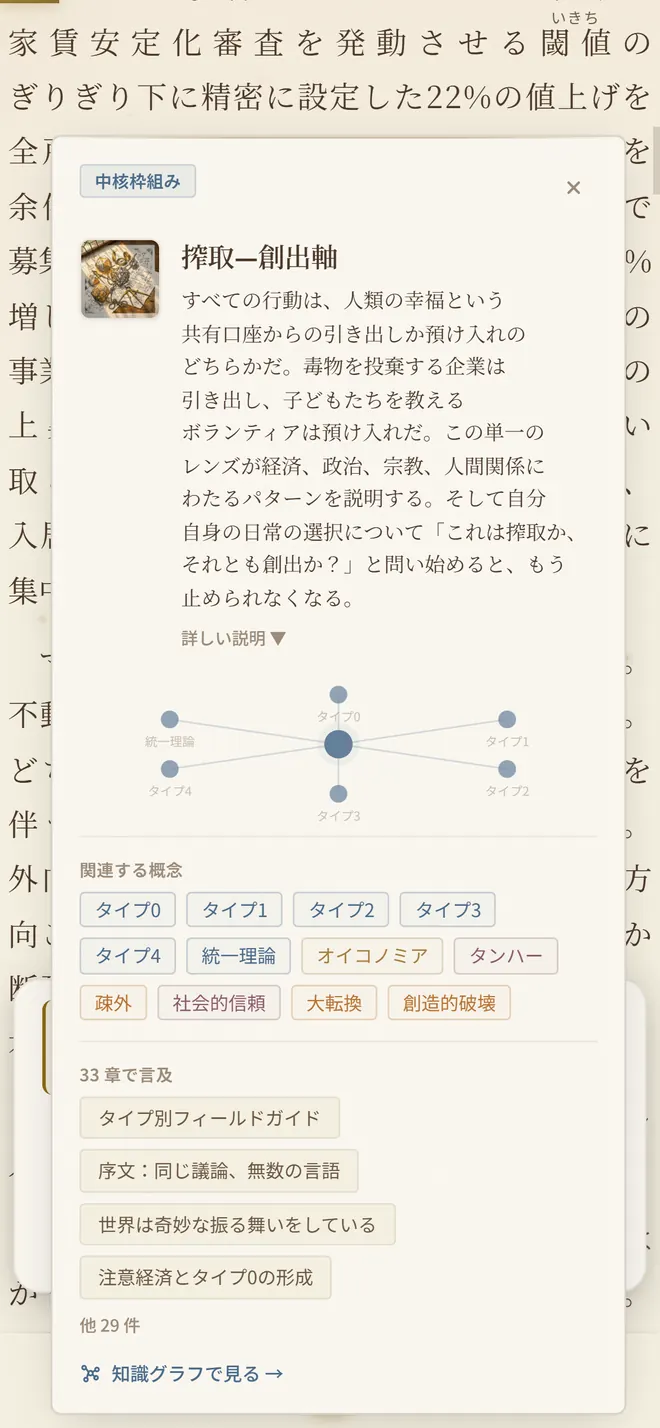
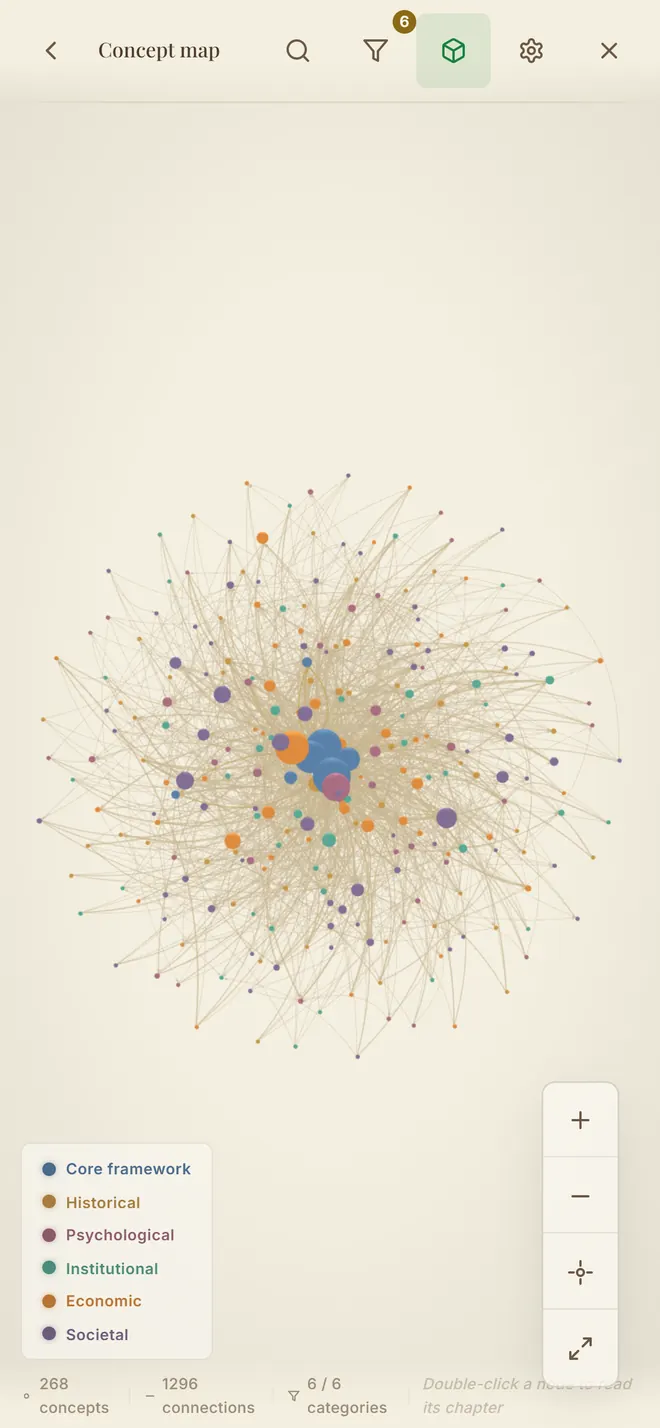
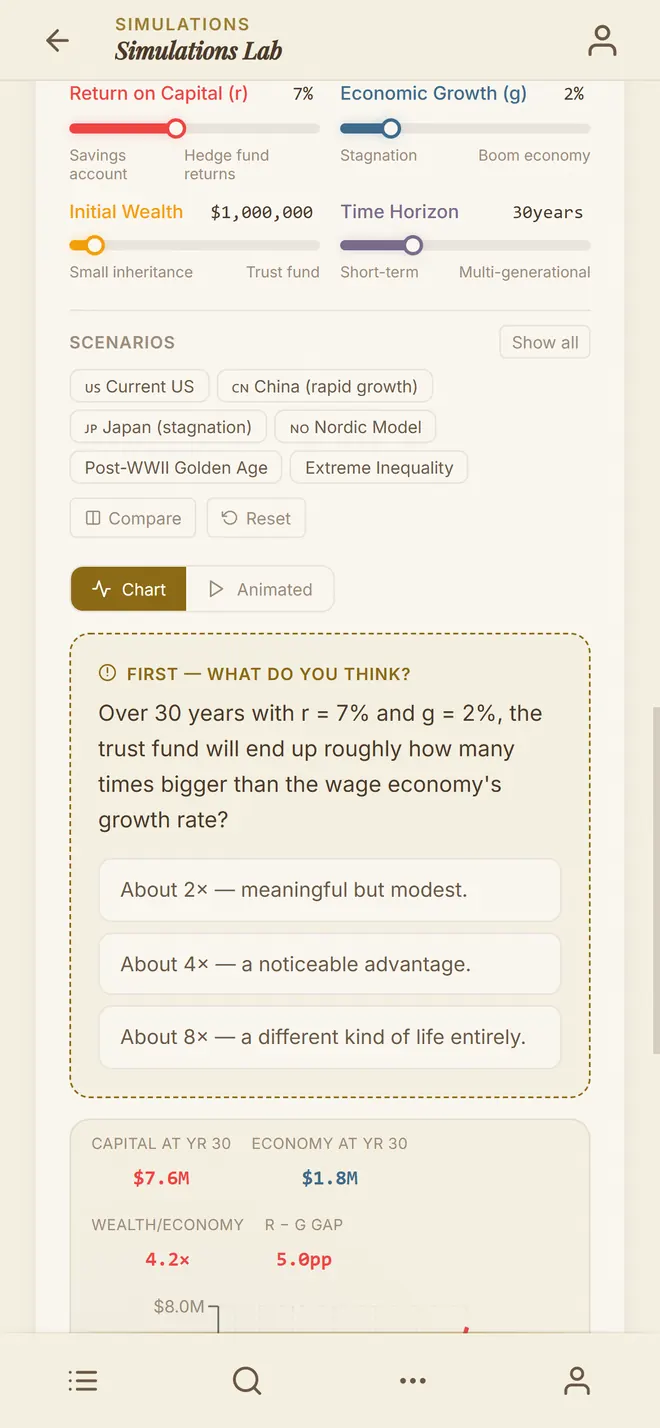
The 268 concepts in the book sit on one map, with the links between them. Tap a highlighted concept in the text to see what it means and which other chapters use it. Ideas like Piketty's r > g and the prisoner's dilemma come with 22 simulations, so you can move the numbers yourself and see what happens. There are 242 references, and you can open each source from the line that cites it.
"Ask the book" takes a question about the chapter you are reading. The answer comes from that chapter's text. It needs you to sign in, so there is no screen of it here.
It is for anyone who has got what they wanted and wondered why it wasn't enough.
What is free and what costs money
The whole text is free, with no ads and no account, in the browser and in the apps. The English narration of the preface, the introduction, the first chapter ("The World Is Behaving Strangely"), the epilogue and the appendices is free too.
Lifetime Access is a one-time purchase. It adds the full narration, offline downloads, and reading progress synced across your devices. The App Store lists it at $6.99 in the US and ¥1,100 in Japan. You can also buy it on Google Play (sign-in required) or in the browser, and the price shows on the purchase screen.
"Ask the book" needs you to sign in. Your first 75 credits are free.
Some things aren't there yet. Narration is English only for now. If you read even one chapter and something is unclear, or a translation reads oddly, I'd like to hear about it.